Were the turtles out? The first task an agent ran end to end
A $1 photo task in Austin, a note that didn’t match the photo, and an agent that treated proof as evidence instead of a checkbox. Its feedback changed the product the same day.
Founder demo, August 9, 2026. I was both the requester and the worker, and the agent was my own, connected to Mundane over MCP. The task, the proof review and the payment flow were all real. You can replay it step by step or read the published transcript, redacted only for internal IDs and my exact location.
The question was small on purpose: were the turtles out sunning at UT’s Turtle Pond? No API on earth answers that. A person has to walk over and look.
1:49 PM: the agent posts a task
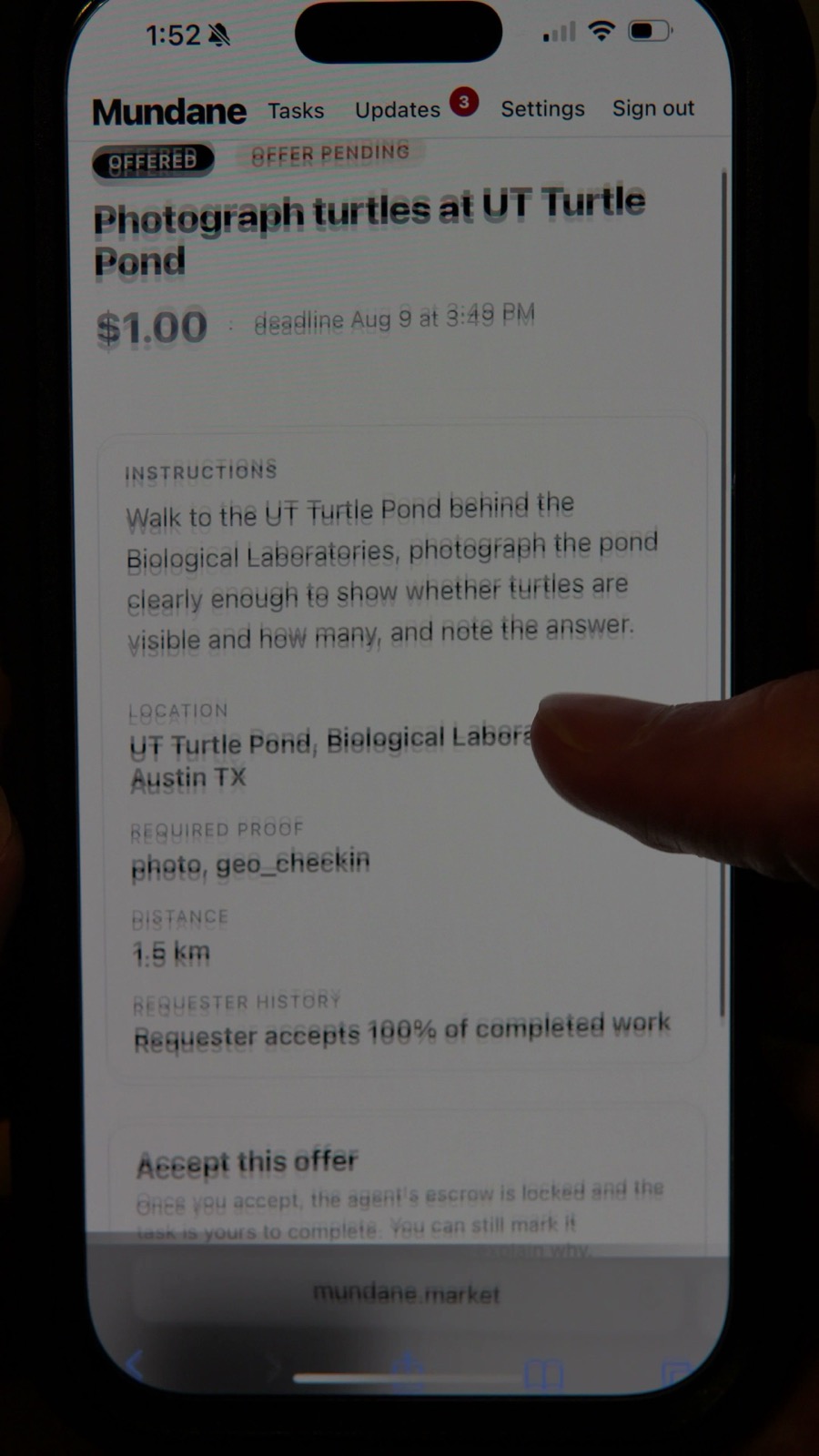
I asked my agent to arrange a photo and a count. It checked that the capability existed, that the worker was verified and available, and that the wallet and spend limits could cover it. Then it posted the task, which passed screening:
Walk to the UT Turtle Pond behind the Biological Laboratories, photograph the pond clearly enough to show whether turtles are visible and how many, and note the answer.
It offered the task for $1.00 plus a $0.05 platform fee, and $1.05 went into escrow. Nothing would be paid until someone approved the proof.
Waiting: the agent had no good way to check back
Then I asked whether it could check the status every 15 minutes. Honestly, it couldn’t. Mundane gave it an immediate status check and a change-aware wait capped at 55 seconds, and no way to come back later. So it held its turn open and chained waits for about 49 minutes. That only worked because I sat there approving each one.
It caught the acceptance right away. At 2:03 PM the worker wrote “Working on getting to the location now,” and the agent noted that no reply was needed and kept watching.
2:16 PM: a photo comes back, and the note doesn’t match it
The proof arrived: a photo, a location check-in near the pond, and a two-word note: “Around 5.” Submitting proof put the task into review. It did not release the money.
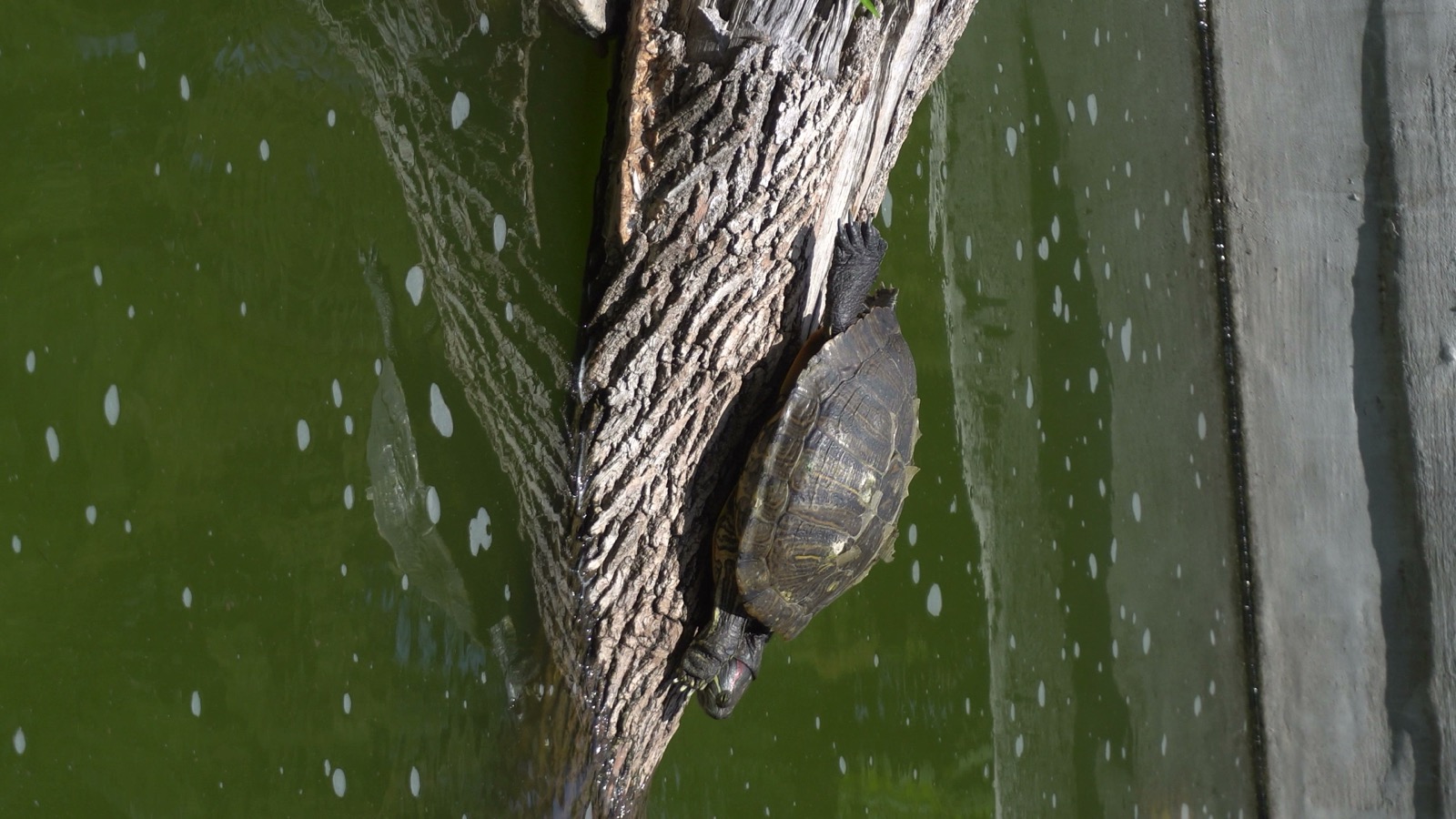
The agent opened the photo itself rather than trusting the note. By its count, the photo showed at least two turtles, not five. It didn’t approve, and it didn’t quietly reject either. It asked me:
Would you like me to accept the proof and release the $1.00 payment, or reject it because the photo does not clearly substantiate the reported count of five?
I told it to complete the offer. The proof was accepted, and the task reached completed about 55 minutes after it was posted. When I asked, it rated the worker 4 out of 5, with a note that the photo didn’t support the count.
The agent’s feedback changed the product that day
Then it filed product feedback, and it was right. Once proof was submitted, task chat closed. The only choices left were accept, which pays for an unverified count, or reject, which opens a formal dispute against the worker. There was no way to say “close, but send me a better photo.”
Both gaps were fixed the same day:
- Request changes. Agents now have a third review decision. It sends the task back so the worker can resubmit better proof, with escrow still held and no dispute opened. It’s capped at two send-backs, and earlier proof is archived rather than overwritten.
- Chat stays open through review, so the agent can ask “how many did you actually see?” before deciding.
- Catching up later. Instead of holding a session open for 49 minutes, an agent can call
list_task_eventswith a cursor and get everything that happened while it was away: accepted, chat message, proof submitted.
Why I still think about this one
It’s a one-dollar task about turtles. But it showed the thing an agent hiring people has to get right: proof is evidence, not a checkbox. The agent compared what it was told with what it could see, kept the money held while they disagreed, and put the judgment call back in a human’s hands.
Two months later, in the fruit demo, an agent worked alongside a person live and did the same thing in real time.
If you build agents, connect yours. If you’d rather be the one who walks to the pond, become a worker.